As a dedicated player, I was thrilled to learn that Garena has officially announced the return of the iconic Alpine map to the Free Fire ranked mode, slated for a major OB update later this year. This isn't just a simple re-release; it's a homecoming for one of the most visually stunning and strategically diverse battlefields ever introduced to the game. Originally launched back in 2022, Alpine captivated us with its unique blend of rugged mountain terrain, industrial complexes, and dynamic elements that set it apart from the familiar landscapes of Bermuda or Kalahari. Its return promises to reinvigorate the ranked meta, challenging veterans and newcomers alike with its distinct topography and points of interest. But what makes Alpine so special, and why is its comeback such a significant event for the Free Fire community in 2026?
A Nostalgic Yet Fresh Battlefield
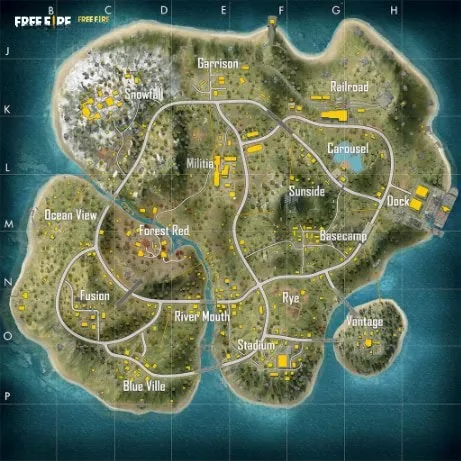
Alpine holds a special place in many players' hearts. It was the fifth map added to Free Fire, following Bermuda, Purgatory, Kalahari, and Bermuda Remastered. Its aesthetic was a complete departure from the norm. Remember the first time you dropped in? The map wasn't just another island; it was a living, breathing region inspired by a real location in San Diego County, California. This connection to reality gave it an immersive quality that few other maps could match. Surrounded by majestic mountains and dotted with lakes, the environment often featured snow, creating a visually crisp and tactical playground. The level of detail was astonishing—from unique building textures to sprawling city layouts that hinted at influences from classic tactical shooters. It truly felt like a fusion of Purgatory's rawness and Bermuda Remastered's polish, but with its own unmistakable identity.
What Made Alpine a Fan Favorite?
The map's popularity wasn't accidental. It was designed with features that directly impacted gameplay and strategy:
-
Dynamic Environmental Elements: Unlike static maps, Alpine introduced non-interactable objects that shaped the battle space. The sight of a massive container ship or a helicopter on a landing pad wasn't just for show; it defined hot-drop zones and rotation routes.
-
Unique Points of Interest (POIs): The map was scattered with exclusive locations that encouraged diverse combat styles.
-
Military Bases: Offering high-tier loot but intense early-game fights.
-
Wind Energy Farms: Fields of towering electric windmills, creating complex sightlines and cover.
-
The Functional Train Station: A central hub that often became a chaotic chokepoint, reminiscent of classic FPS map design.
-
-
Strategic Verticality: The mountainous terrain meant elevation was king. Controlling the high ground around the lakes or overlooking the cities provided a massive tactical advantage, making positioning more critical than ever.
Could these classic features be enhanced with new mechanics in the 2026 version? That's the question on every player's mind.
The 2026 Revival: What Can We Expect?
While the core identity of Alpine will remain, its integration into the 2026 ranked season suggests Garena has more in store than a simple port. The gaming landscape has evolved, and so have player expectations. Here’s what its return likely signifies for the current meta:
| Legacy Feature | Potential 2026 Evolution |
|---|---|
| Iconic Train Station | Could become an interactive loot train route or a zone-control objective. |
| Solar/Wind Farms | Might introduce environmental hazards or energy-based zone mechanics. |
| Mountainous Sniping Perches | Likely balanced with new traversal tools or cover items introduced in recent updates. |
| Helicopter & Ship POIs | May be integrated into updated loot tables or serve as exfil points in new game modes. |
The graphical fidelity will undoubtedly see an upgrade. Imagine the snow-capped peaks and glacial lakes rendered with the latest engine improvements—the view from the plane will be more breathtaking than ever. Furthermore, the map's return is perfectly timed to disrupt the established ranked strategies centered on newer maps, forcing players to re-learn rotations and power positions.
Why This Matters for the Competitive Scene
For competitive players and esports enthusiasts, Alpine's return is a game-changer. Ranked mode thrives on variety and challenge. Introducing a map with such a distinct geographical and structural profile will test a team's adaptability. Strategies that work flawlessly on the flat sands of Kalahari or the cluttered streets of Bermuda may fall apart in Alpine's vertical, open valleys. This levels the playing field and rewards game knowledge and versatility over one-dimensional skill. It pushes the meta forward, encouraging innovation in team composition and in-game decision-making. Isn't that the ultimate goal of a healthy ranked ecosystem?
Final Thoughts: A Welcome Challenge
The confirmation of Alpine's return is more than just a content update; it's a commitment to preserving Free Fire's rich map diversity while pushing competitive play forward. It represents a bridge between the game's cherished history and its evolving future. As we await its official release with the upcoming OB update, the anticipation is building. Will you drop hot at the military base, or play a slow, tactical game from the mountain ridges? One thing is certain: the ranked ladder in 2026 is about to get a lot more interesting, and I, for one, can't wait to land on those familiar, snowy slopes once again and write new stories of victory and defeat in this legendary arena. 🏔️⚔️
Leave a Reply
0 Comments