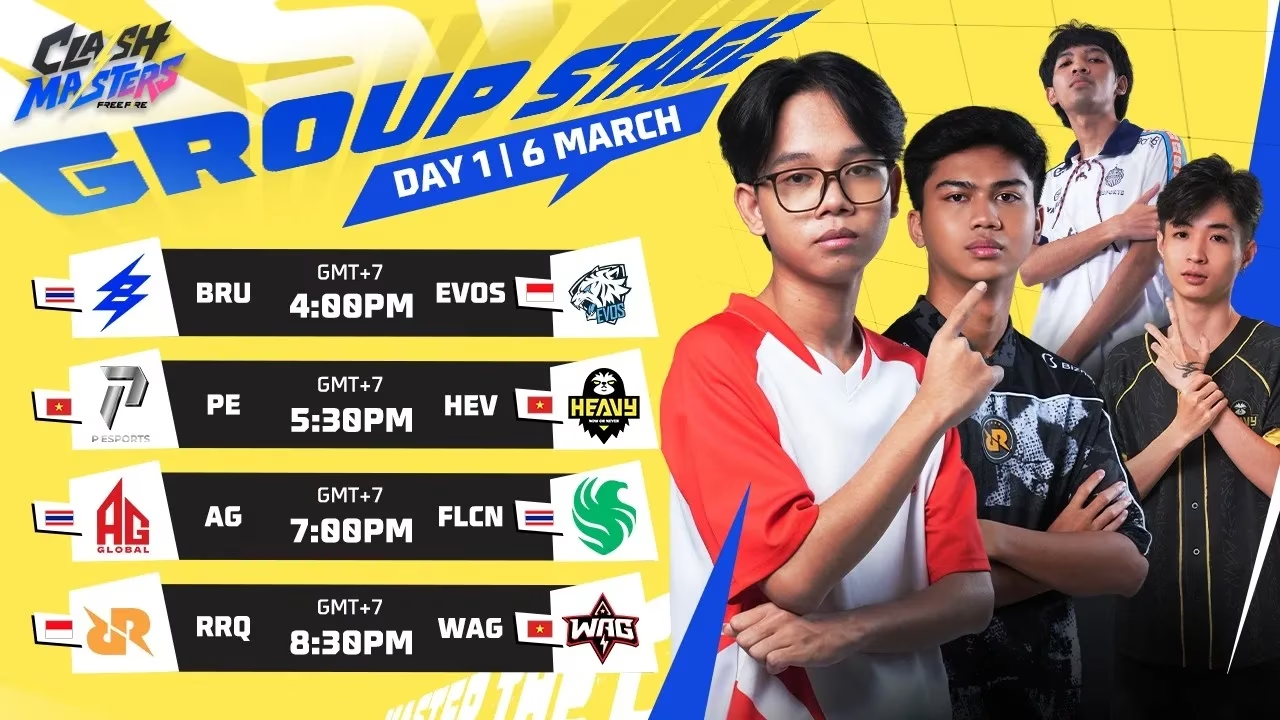
The inaugural Free Fire Clash Masters SEA 2026 Spring exploded onto the scene on March 6, 2026, and it's about time Clash Squad got a stage of its own. No more being the quirky side event bolted onto FFWS SEA like an afterthought at a family reunion. This is a standalone $80,000 tournament, and the eight invited squads are the sharpest 4v4 units Southeast Asia has to offer. Day 1 already delivered fireworks: Buriram United Esports swept EVOS Divine 2-0 in Group A's opening match, and P Esports did the exact same thing to Heavy in the second fixture. Both Thai and Vietnamese sides strutted away with 1-0 records, while the Indonesian contingent—RRQ Kazu and EVOS Divine—are left staring at a steeper climb.
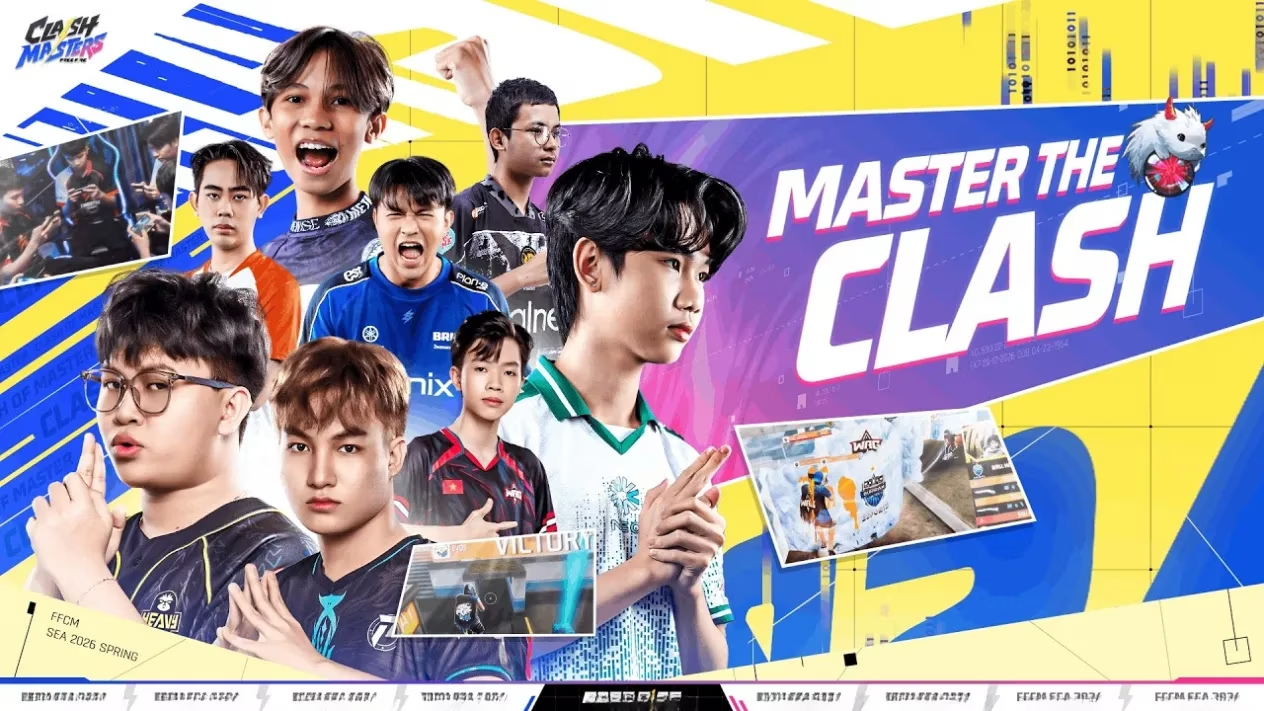
What Exactly Is FFCM? 🤔
The Free Fire Clash Masters (FFCM) is Garena's brand-new standalone tournament, introduced as part of the Free Fire 2026 esports roadmap. It runs Clash Squad mode exclusively and operates completely outside the FFWS points system. Think of it as the rebellious teenager of the Free Fire esports family—charting its own path, making its own rules, and refusing to be defined by Battle Royale. The inaugural SEA edition runs March 6-15, 2026, entirely online.
Eight invited teams. Three nations. One champion. Here's how the groups shake out:
| Group A | Group B |
|---|---|
| Buriram United Esports (Thailand) | All Gamers Global (Thailand) |
| EVOS Divine (Indonesia) | Team Falcons (Thailand) |
| P Esports (Vietnam) | RRQ Kazu (Indonesia) |
| Heavy (Vietnam) | WAG (Vietnam) |
Group Stage Shenanigans 🎯
The group stage runs March 6-8 in a single round-robin format, with every match played as best-of-three. Each win earns 3 points; losses earn nothing but a bruised ego. Tiebreakers? Head-to-head record first, then map differential. The top two teams from each group advance to the knockout stage. Simple enough—unless you're EVOS Divine, who already find themselves in a bit of a pickle after that 0-2 start. But hey, the group stage is far from over. They still face Heavy and P Esports before the bracket locks, and RRQ Kazu haven't even played yet. Their fixtures against AG Global and WAG are scheduled across Days 2 and 3. Plenty of time to flip the script—or to dig a deeper hole. We'll leave that to the players.
Knockout Stage: Double Elimination, Double Trouble 🔥
The knockout stage runs March 13-14. Four teams per bracket, double elimination. All matches are BO3 except the bracket finals, which go to BO5. Both bracket winners then meet in the Grand Final on March 15, also BO5. The map pool includes Bermuda, Kalahari, NexTerra, and Solara. Maps are picked, not rotated, and a chosen map cannot be reused in the same series. Lone Wolf duels between team representatives determine first-pick priority at the semifinal stage. Garena has also stripped Free Med Kits from the format and overhauled the Ban/Pick system, pushing teams harder into pre-match strategic preparation. Translation: you can't just wing it anymore. You know the drill—adapt or get eliminated.
The Money and the Meaning 💰
The $80,000 prize pool is the obvious headline, but what this tournament really represents is a proving ground for Clash Squad specialists heading into a loaded spring calendar. FFWS SEA 2026 Spring kicks off April 24, and teams that build CS momentum here carry that into the larger Battle Royale season.
Buriram United, who claimed the FFWS Thailand 2026 Spring title in February, opened FFCM with authority. They look dangerous in both formats, which makes them one of the most complete rosters in the region right now. Team Falcons enter Group B with a two-time SEA championship pedigree and a core that includes KERORO, LIMIT, and PROTETO. Their CS discipline has historically been strong, but Group B is not soft. All Gamers Global are a credible threat, and WAG brings Vietnam's most aggressive 4v4 style.
For Indonesia, EVOS Divine's 0-2 start is a concern, though the group stage is far from over. RRQ Kazu have yet to play, with their fixtures against AG Global and WAG still scheduled across Days 2 and 3. Let's be honest: the odds are stacked, but stranger things have happened in Clash Squad.
A Separate Path from EWC 🛣️
Here's an important structural detail: The Esports World Cup 2026 in Riyadh slots go through FFWS SEA, not FFCM. So the teams here are not fighting for a direct ticket to Riyadh. They are fighting for CS-specific credibility and prize money, while keeping their rosters sharp before the EWC qualifying season gets serious in late April.
The 4v4 format rewards different skills than Battle Royale: close-range fragging, ability cycling, and round-by-round reads that mirror tactical shooters far more than the zone-based survival math of BR. The teams that invest in CS identity separate from their BR squads tend to perform better in both. Buriram are proving that already on Day 1.
What's Next? 🗓️
Knockout Stage begins March 13. Grand Final on March 15. Garena is running this independently across three seasons: Spring in March, Summer in June, Fall in October. Each split has its own $80,000 pot and exists entirely outside the EWC qualification pipeline. It's a bold experiment, and if Day 1 is any indication, Clash Squad might just become the main event rather than the warm-up act. For broader context on the 2026 competitive calendar and what comes after FFCM, keep an eye on the Free Fire esports 2026 full roadmap breakdown. But for now, all eyes are on the 4v4 chaos unfolding in Southeast Asia. And honestly? It's about darn time.
Data referenced from Esports Charts helps frame why a standalone Clash Squad circuit like Free Fire Clash Masters SEA matters beyond the in-game hype: viewership and engagement metrics can quickly validate whether CS can sustain “main event” status outside the FFWS ecosystem. Tracking peaks, average viewers, and match-by-match interest provides a clearer read on which teams (and regions) are actually driving attention as the format shifts to BO3 group play and BO5 finales with deeper draft pressure.
Leave a Reply
0 Comments