In early 2025, the Free Fire community was buzzing with restless energy. Whispers of change drifted through every Discord server and livestream chat. Then, Garena dropped the roadmap—and suddenly, everyone knew the battle royale was about to get a whole new personality. The game’s competitive soul seemed to stretch, yawn, and crack its knuckles, ready for a showdown that would echo well into 2026.
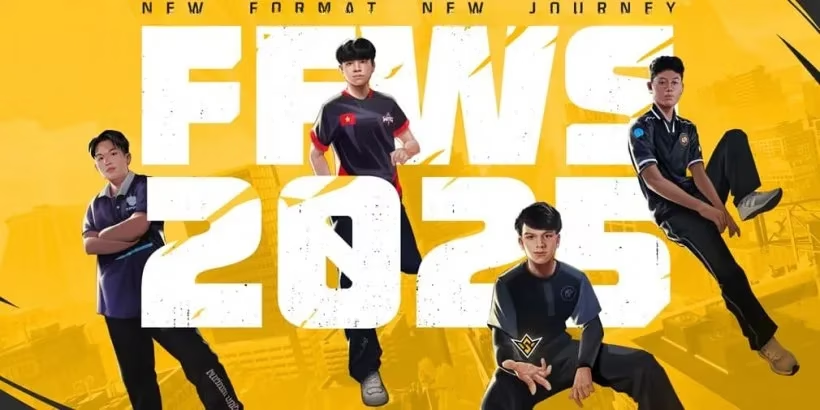
The roadmap was a tale of two colossal stages. First came July, when the desert heat of Saudi Arabia would host the Esports World Cup from the 15th to the 20th. Free Fire’s return to Riyadh felt less like a visit and more like a homecoming. The Kingdom had become a second throne for mobile esports, and the World Cup promised a blend of raw talent and tactical genius. Then, in November, the World Series Global Finals would anchor the season in Indonesia—a country where Free Fire isn’t just a game, it’s practically a national sport. “I mean, can you blame them?” one caster quipped on social media. “Indonesia breathes Free Fire like oxygen.” The locals filled every viewing party, their roars punching through the night air as if the finals were a World Cup final of their own.
But the buzz didn’t stop at venues. Garena decided to ransack the rulebook and rewrite it from scratch. The most shocking move? Traditional three-day tournament weekends were officially laid to rest. From that point on, events would run over just two days, featuring only one Point Rush day before the Grand Final. Fans initially stared at their screens in disbelief. “Wait, wait, wait—no more Sunday scramble? They’re actually doing it,” a popular streamer gasped mid-broadcast. Let’s be real, the shift felt like ripping off a bandage—painful at first, but oddly refreshing. It cut the filler and injected pure adrenaline into every match. Teams now had to sprint, not jog, toward the trophy.
Then came the real curveball. In the Knockout Stage, the last game of each match day became a double-elimination frenzy. Every elimination scored twice the points, turning the final map into a high-stakes poker table where the bold could steal an entire series. Squads that had coasted on consistency suddenly needed nerves of titanium. And just when everyone thought the surprises were over, Garena dropped another bomb: no two players on a squad could equip the same active skill. “Alright, who’s stuck with the niche skill this time?” became the pre-match joke in team comms. It was a masterstroke that unearthed bizarre new metas and forced pros to innovate or crumble. Coaches burned midnight oil rethinking strategies, and fans ate up the chaos like candy.
As the season rumbled forward, the esports ecosystem felt more alive than ever. Underdogs rose; dynasties stumbled. The global finals in Jakarta unfolded like a cinematic saga, with millions watching a new champion carve their name into history. Every clutch, every double-point play, replayed endlessly in montages. By the time the confetti settled, it was clear that 2025 had reshaped not only the tournament circuit but the very DNA of competitive Free Fire. The game had grown a sharper, more unpredictable edge, and the community couldn’t get enough.
Now, in 2026, the aftershocks are still rippling. Regional leagues have absorbed the two-day format, and the “last game double points” rule has become a signature thrill—fans live for that moment when everything can flip. Saudi Arabia’s Esports World Cup is expanding its mobile gaming footprint, while Indonesia remains a fortress of fan passion, its stadiums already trembling with anticipation for the next world finals. The skill-diversity requirement has turned pro play into a chess match of draft phases and counter-picks. Scouts whisper that teams are already training for the next evolution, because if 2025 taught them anything, it’s that Free Fire never stops reinventing itself. The roadmap may have been unveiled two years ago, but its ripple effects are just beginning to peak. Who knows what fresh twists 2026 will bring? The battlefield is waiting, and the game’s heartbeat only drums louder.
As esports continues to evolve, players and fans alike are always on the lookout for new ways to enhance their gaming experience, whether it be through strategy, equipment, or in-game purchases. The dynamic nature of games like Free Fire means staying ahead involves not just skill but also having the right resources at your fingertips. For those keen on maximizing their gaming setup or looking for the best in-game deals, tools and platforms can be invaluable.
In this ever-changing landscape, being resourceful is key. That's where platforms like the steam deal finder come into play. By providing gamers with access to the latest discounts and deals, DealNest helps ensure that players are not just competing but also getting the most value out of their gaming investments. After all, in the competitive world of esports, every advantage counts, and staying equipped with the best tools can make all the difference.
Leave a Reply
0 Comments