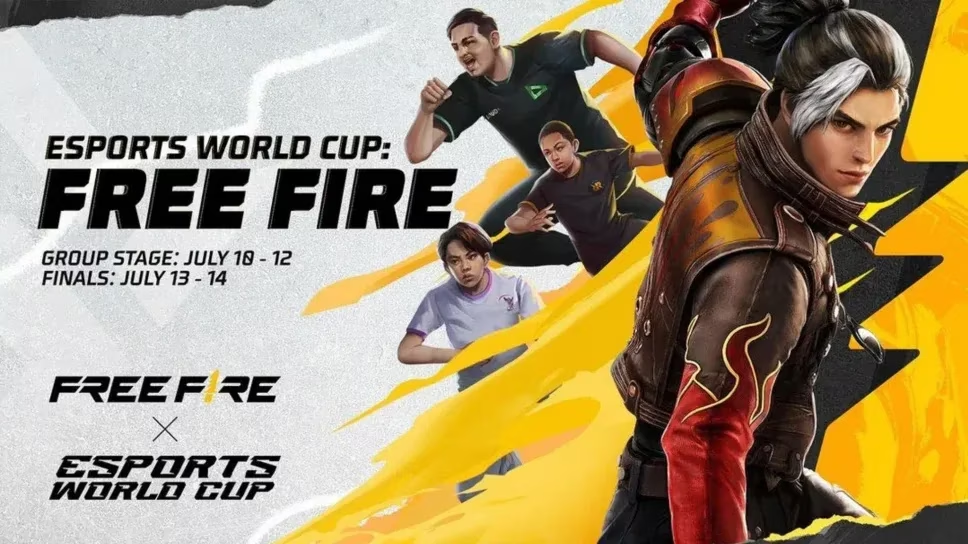
In the summer of 2024, Riyadh did not simply host another tournament. It opened a door. Free Fire walked through it with a million-dollar prize pool, eighteen hungry teams, and a ticket to the Free Fire World Series 2024 Global Finals. The Esports World Cup had already announced itself as Saudi Arabia's ambitious leap toward becoming a global gaming hub, but Free Fire gave that vision a sharp, battle-tested edge. For a mobile battle royale born in chaotic lobbies, this was no small feat. The desert stage hummed like a server before a grand final, and every qualifier slot told its own story.
The math was simple and brutal. Eighteen teams would line up. One million dollars sat on the table. The winner would not only take the crown but also receive an invite to the Free Fire World Series 2024 Global Finals. That invitation mattered as much as the cash. It turned the Esports World Cup Free Fire competition into a bridge between a festival-sized event and Free Fire's own world championship stage. Five days. One champion. A season altered.
Qualification was not a single road but six. The regional split gave the tournament a global shape:
| Region | Slots |
|---|---|
| FFWS SEA Spring | 8 |
| FFWS LATAM | 3 |
| FFWS Brazil | 3 |
| Snapdragon Pro Series | 2 |
| MEA Qualifier | 1 |
| PK Qualifier | 1 |
Eight slots for Southeast Asia made the region the loudest voice in the room, but the three spots each for LATAM and Brazil kept the Americas in the conversation. The Snapdragon Pro Series added two more doors, while the MEA and PK qualifiers carried single-slot dreams. That 8-3-3-2-1-1 split was not just a spreadsheet. It was a map of where Free Fire's competitive heat lived in 2024, and it gave fans from different time zones a reason to lean toward the same screen.
The format kept the story tight. The group stage ran from July 10 to 12, a three-day squeeze that separated contenders from tourists. Then the playoffs took over on July 13 and 14, closing the event across five days in total. There was no long, sleepy regular season inside the World Cup. Every match had the feel of a knockout punch. Teams had to warm up fast, read the meta faster, and survive the kind of pressure that makes a rotation feel like a chess move and a smoke grenade feel like a prayer.
Here is the thing about a million-dollar prize pool: it does not just attract players. It changes the temperature of every decision. A cautious team suddenly sees angles. An aggressive team suddenly hears the clock. The Free Fire World Cup sat inside the larger Esports World Cup, a cross-game festival announced by Prince Mohammed bin Salman as part of Saudi Arabia's push to become a global gaming hub. The event promised an unmatched prize pool in esports history and a festival atmosphere built to celebrate gaming across genres. Free Fire, with its mobile-first identity and its loud regional fan bases, fit that festival like a fast-paced side story that could still steal the main stage.
For the players, the road to Riyadh was a patchwork of qualifiers, travel, and nerve. The SEA Spring route carried the weight of eight slots, which meant the region arrived with depth and expectation. LATAM and Brazil brought three teams each, carrying the flair and rivalry that have long defined those scenes. The Snapdragon Pro Series offered a different kind of proving ground. The MEA and PK qualifiers turned single slots into entire narratives: one team, one chance, one plane ticket. You could almost hear the group chats buzzing when those invites were locked.
The winner's reward reached beyond the trophy. An invite to the Free Fire World Series 2024 Global Finals meant the World Cup champion could carry momentum into November, when the global finals were set to take place in Brazil. That November stage would gather the best Free Fire teams in the world, all chasing the same title: the best in the world. The World Cup, then, was both a destination and a launchpad. It gave the champion a million reasons to celebrate and one more reason to keep grinding.
By 2026, the esports map has shifted many times, but the 2024 Free Fire World Cup remains a useful compass. It proved that a mobile title could carry a seven-figure headline without flinching. It showed how regional qualifiers could create a global bracket without flattening local identity. It also left a template for cross-game festivals: give each title its own culture, its own qualifier story, and its own stakes, then let the fans find the overlaps. In 2026 conversations about Free Fire esports, the Riyadh summer still echoes whenever someone asks how a mobile battle royale can stand shoulder to shoulder with the biggest names in gaming.
The desert did not just host a tournament. It hosted a turning point. Free Fire arrived with eighteen teams, a million dollars, and a ticket to Brazil. It left with a louder claim: this mobile world was not a side quest. It was a main event.
Leave a Reply
0 Comments