As I stand on the precipice of 2026, my mind drifts back to the electric storm that was the Free Fire World Series of 2024, a seventeen-day symphony of digital warfare that painted Rio de Janeiro in hues of adrenaline and ambition. It was more than a tournament; it was a pilgrimage for the faithful, a convergence where pixels held the weight of nations and every tap on a screen echoed like a war drum across continents. Brazil, the cradle of samba and football, opened its arms once more after five long years, transforming its iconic arenas into coliseums for a new generation of gladiators. I remember the air in Rio, thick not just with the Atlantic breeze but with the palpable static of eighteen dreams, each team a distinct constellation in the esports galaxy, all drawn to the same gravitational pull of glory.
The Grand Stage: A Tapestry of Arenas and Ambition
The journey unfolded across two temples of competition, each with its own soul. The Riocentro hosted the initial Knockout stage from November 8th to 17th, a sprawling proving ground where hopes were forged or shattered. It was a place of raw, unfiltered ambition, like a bustling port where ships from every corner of the gaming world docked, their cargo being sheer skill. Then, the focus narrowed, the intensity distilled, as the action moved to the hallowed grounds of Carioca Arena 1 for the Point Rush and the climactic Grand Finals on November 22nd-24th. This arena, no stranger to Olympic feats, now thrummed with a different kind of athleticism. The transition between venues felt like moving from a writer's chaotic study to the pristine, focused silence of the library just before a masterpiece is penned—the same story, but the atmosphere profoundly deepened the narrative.
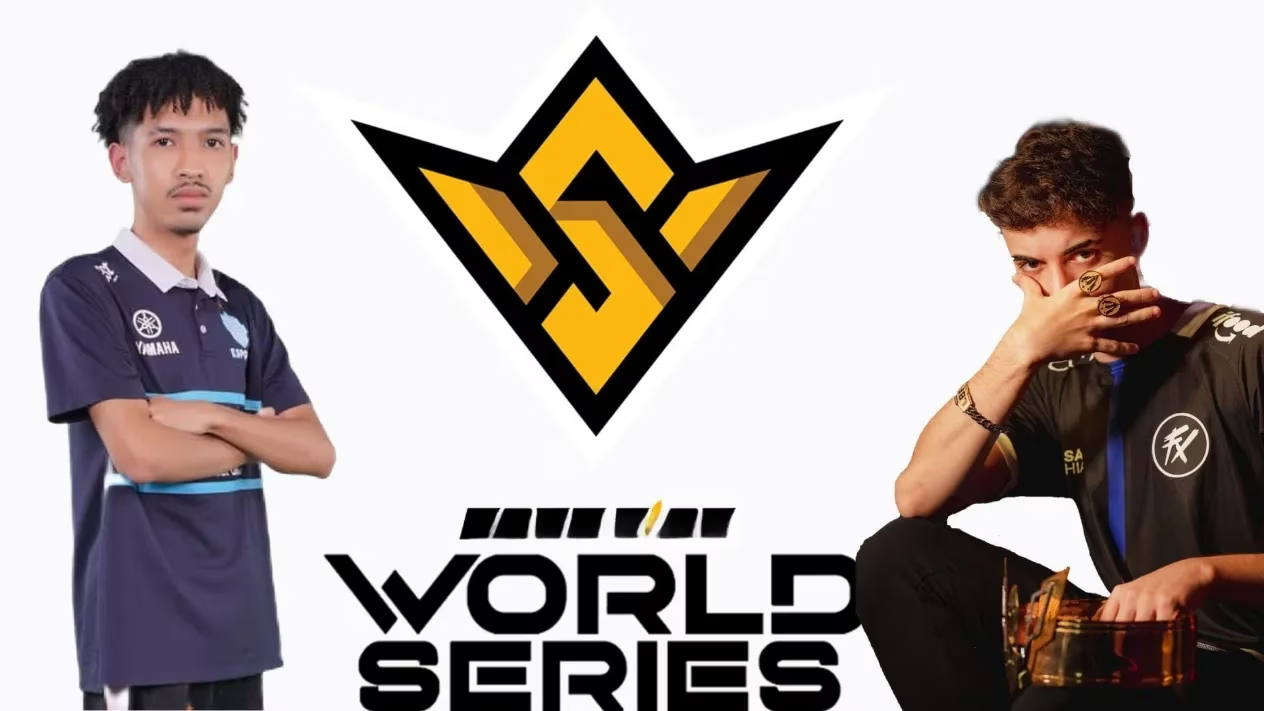
The Pantheon of Champions: Eighteen Vessels of Fire
Who were these modern-day argonauts? They came not from myth, but from the relentless grind of regional battlegrounds. To me, watching them gather was like observing a meticulously arranged spice market, each stall offering a unique, potent flavor that promised to define the feast of competition.
The Asian Powerhouses 🌏
-
Thailand's Fury: Led by the pre-tournament titans, Team Falcons, who had already tasted victory at the Esports World Cup in Riyadh. They were the seasoned captains of this fleet. Alongside them stood Buriram United, Twisted Minds, and Attack All Around—a quartet representing Thai dominance.
-
The Indonesian Wave: RRQ Kazu, Evos Divine, and Bigetron Delta carried the hopes of the archipelago, their playstyle as intricate and unpredictable as the islands they hailed from.
-
Vietnam's Precision: HUA Esports and WAG entered the fray, their strategies often as sharp and deliberate as a master calligrapher's brushstroke.
The Home Continent & Beyond 🌎
-
Latin American Passion: Six Karma, Reta Esports, and CLG brought the fiery spirit of LATAM, qualifying through their own grueling split.
-
Brazil's Heartbeat: The host nation's pride rested on four shoulders: Fluxo, Pain Gaming, Corinthians, and E1 Esports. Playing before their home crowd, their every move was a love letter to Brazilian esports.
-
Global Pioneers: Completing this mosaic were WASK from Morocco (MEA) and Rezurrection X from Pakistan. They were the rare, exotic blossoms in the garden, proof that talent and determination could bloom fiercely in any soil.
The Trilogy of Trials: Knockout, Point Rush, and Grand Finals
The structure of the event was a narrative in three perfect acts, each designed to test a different facet of a team's soul.
-
The Knockout (Nov 8-17): This was the great sifting. Eighteen became twelve. It was a relentless gauntlet, a process that felt less like a tournament and more like watching raw ore being subjected to immense pressure to reveal the diamonds within. Only the most resilient would advance.
-
The Point Rush (Nov 22-23): A brilliant, tense interlude. Here, the top twelve battled not for survival, but for a precious head start in the final race. Every point secured was a piece of armor, a slight shift in the wind before the ultimate voyage. The atmosphere was like the charged, silent moment in a chess match where a player calculates a gambit that will define the endgame.
-
The Grand Finals (Nov 24): The apex. The single-day showdown where months of preparation, years of dreaming, and seventeen days of battle crystallized into one final, glorious conflict. The prize pool, though undisclosed, was almost irrelevant next to the immutable trophy and the right to be called the world's best. This day was the final, stunning brushstroke on a canvas that had been painted over the preceding weeks.
Legacy and Reflection: The Echoes in 2026
Looking back from 2026, the FFWS 2024 stands not as a relic, but as a cornerstone. It reaffirmed Brazil as a spiritual home for global esports and demonstrated Free Fire's unparalleled ability to weave a truly worldwide narrative. The paths to qualification—from the SEA Fall to the LATAM Split, the Brazilian finals, and the regional qualifiers for MEA and Pakistan—were like many rivers, each with its own current and history, all flowing inevitably into the same magnificent ocean in Rio.
The victory of Team Falcons, ascending through their World Cup win, set a precedent for international consistency. But for me, the true magic lay in the collective. It was in the silent focus of a player from Pakistan, the coordinated chaos of a Brazilian squad defending home turf, and the strategic grace of the Vietnamese teams. This event was a testament to a simple, powerful truth: in our digital age, courage, teamwork, and the desire to be legendary can turn anyone, from anywhere, into a hero on the world's stage. The fireworks over Carioca Arena 1 have long faded, but the stories forged there—of ambition, geography, and pixel-perfect skill—continue to resonate, inspiring the battles we witness today.
Leave a Reply
0 Comments