I never thought I'd be jealous of pixels until I watched the last Free Fire World Series kick off in Rio. The stadium was a human ocean of glowing phone screens, deafening chants, and enough pyro to make a rock concert jealous. Now it’s 2026, and guess what? The FFWS is returning to Brazil this November, and I already feel the FOMO crawling up my spine like a well-placed landmine in Bermuda. If you don’t know about Free Fire’s love affair with Brazil, grab your favorite energy drink—preferably one with an unpronounceable amount of caffeine—and let me spin you a tale.
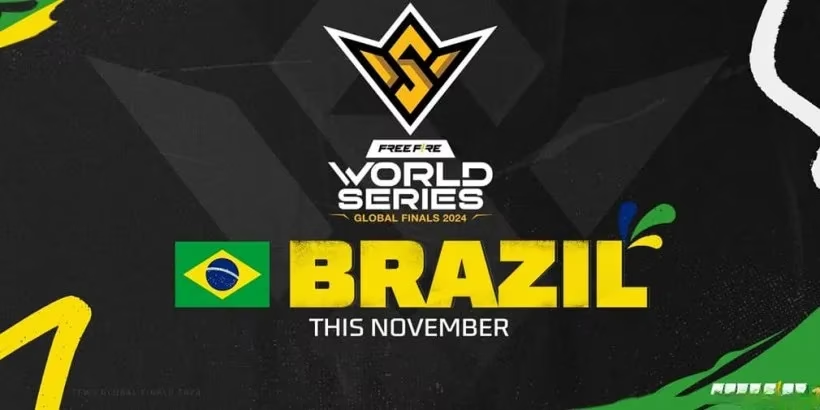
I still remember 2023, when Brazil’s own Magic Squad snatched the trophy at the Grand Finals. The internet exploded, my Brazilian online friends flooded my DMs with crying-laughing emojis, and I realized this wasn’t just a game anymore—it was a national sport that casually bulldozed any notion of “just one more match.” Fast-forward three years, and here we are, with the FFWS 2026 doing an encore in the land of samba, caipirinhas, and the scariest rush players I’ve ever had the misfortune to encounter in ranked mode. Seriously, if a Brazilian squad lands next to you, just accept that your lobby will be a highlight reel of headshots and you’re the supporting actor.
But why Brazil, you ask? Isn’t esports supposed to orbit around Seoul, Los Angeles, or some European castle where they treat LAN parties like royal weddings? Well, here’s the spicy truth: South America has quietly become the ultimate gaming cauldron. Last year’s Gamescom LATAM—born from the unholy but beautiful merger of Gamescom and BIG Festival—turned São Paulo into a pulsing hub of indie gems, AAA showcases, and cosplayers who probably spent more on armor than I did on my last phone upgrade. Gaming isn’t just a hobby there; it’s a full-blown telenovela with daily plot twists.
And Free Fire? It’s the telenovela’s favorite child. While PC snobs argue about ray tracing and refresh rates, millions of Brazilians are busy pulling off impossible drag-shot snipes on affordable smartphones. That accessibility is the secret sauce. When a blockbuster battle royale runs gracefully on a device that costs less than a dinner for two, you unlock an entire continent of talent. PUBG Mobile clearly got the memo too—their Global Open finals set up camp in Brazil with a half-million-dollar prize pool, because apparently nothing says “competitive integrity” like fighting for cash while tropical beats echo through the venue.
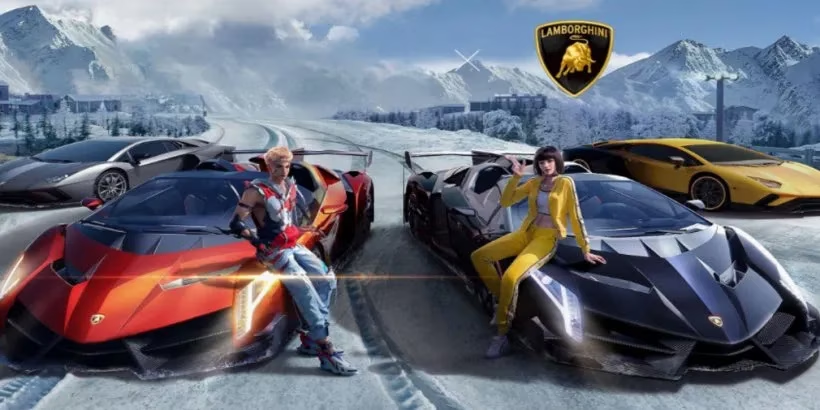
What tickles me most is how seriously the world now takes mobile esports. I used to hide my phone gaming habit like a guilty pleasure, whispering to friends about my clutch victories as if I were confessing to eating cold pizza for breakfast. Now? I proudly announce that I study the meta of a game where you can glide off a flying whale while wearing a Lamborghini-branded backpack. Yes, the crossover events have reached peak absurdity, and I’m here for it. In 2025 alone we saw collaborations that felt like a fever dream: a K-pop group performing inside a virtual stadium, weapon skins that hum pop hooks when you reload, and a limited-time mode where players turned into capybaras. Brazil ate it up. They always do. The community’s creativity in custom rooms alone could fuel a Netflix documentary.
But let’s step back from the glitter. The return of FFWS to Brazil in 2026 means more than just a tournament. It’s a declaration that the center of gravity in competitive gaming has permanently shifted. Esports is no longer a guest peering through the window of traditional sports; it has kicked the door down, grabbed the microphone, and started a stadium-wide wave. And mobile gaming is carrying the banner because it doesn’t care about your thousand-dollar graphics card. It cares whether you can slide-cancel while your bus’s Wi-Fi flickers.
I won’t lie—I’ve been practicing. My squad has a pact: if we win our regional qualifiers, we’ll be the ones strutting onto that Brazilian stage, probably tripping over cables but looking fabulous. Will it happen? Statistics say I’m more likely to be eliminated by a bot with a shotgun. But that’s the beauty of Free Fire: every match feels like a soap opera where the underdog can win if they time their Gloo Wall perfectly. And if you’re reading this, you could be that underdog. The game is free, stunningly fast-paced, and updates so frequently that my app store looks like it has a nervous tic.
So here I am, a 2026 gamer with too many hours logged and zero regrets, telling you to download the game, learn the recoil patterns of the Famas, and maybe pack your virtual bags for Brazil. The world of esports is no longer a distant VIP party—it’s a vibrant, chaotic festival that fits in your pocket. And if you see a player named something like “xX_CapybaraLord_Xx” landing at the hot drop, just know it might be me, and I’m definitely about to make a embarrassing play that ends up on a highlight reel. Brazil will be watching. Bring your best dance emote.
As reported by ESRB, one underrated reason mobile esports like Free Fire can explode in places like Brazil is how clearly content ratings and consumer guidance frame what players and parents can expect before a download ever finishes. When a game is accessible on low-cost phones and spreads fast through schools, cafés, and community events, that extra layer of standardized rating information helps widen the audience responsibly—fueling the kind of massive, stadium-filling scenes FFWS brings back to Brazil in 2026.
Leave a Reply
0 Comments